To avoid the bustle of American Thanksgiving, we headed north to Everglades National Park. Observing a bird almost with every blink along the park highway, we quickly learned that there is a great abundance of wildlife there! A lucky Great Blue Heron almost struck our windshield and if he'd zigged instead of zagged, a tragedy would have unfolded.
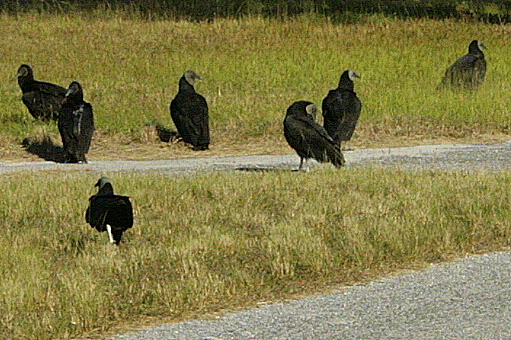
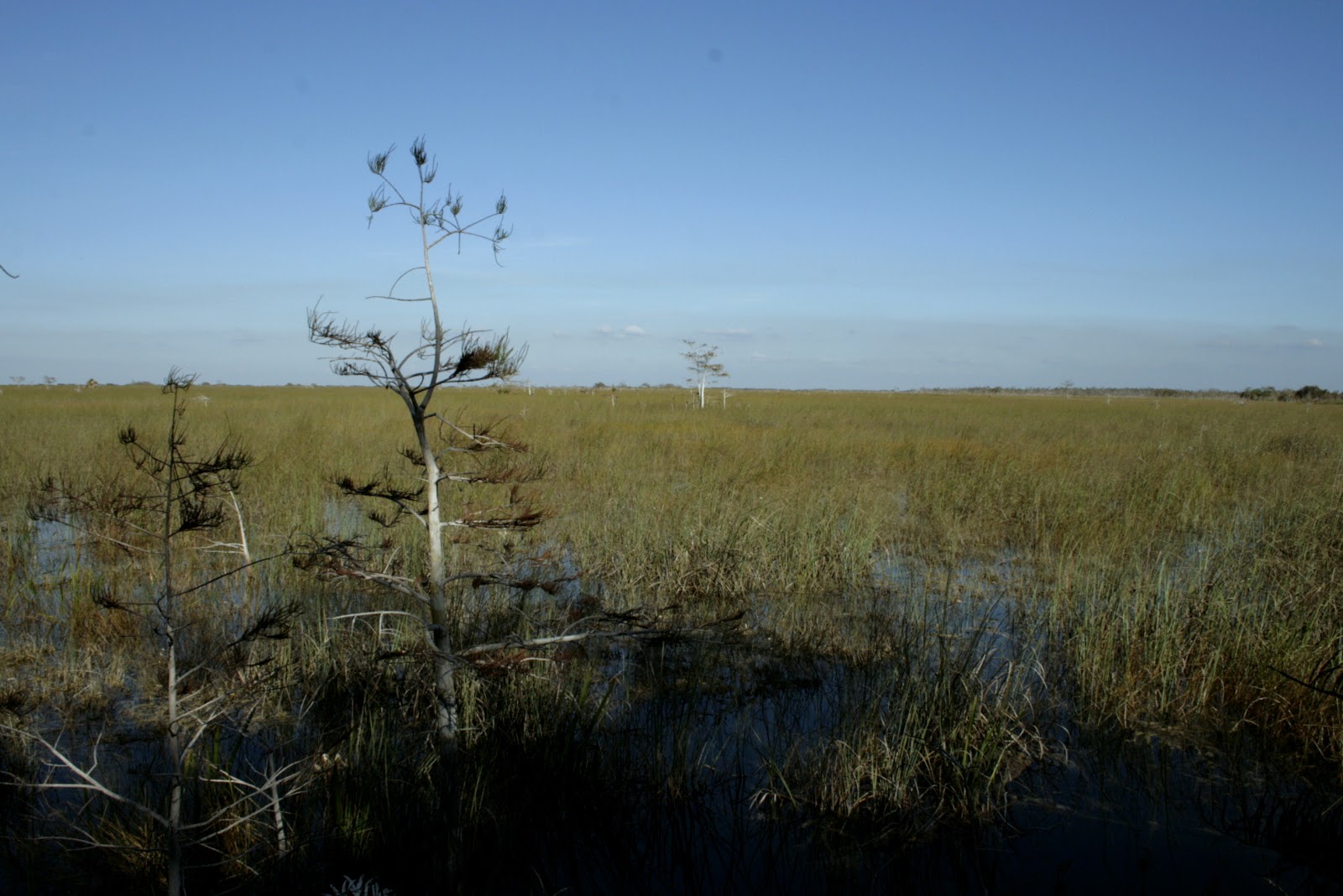
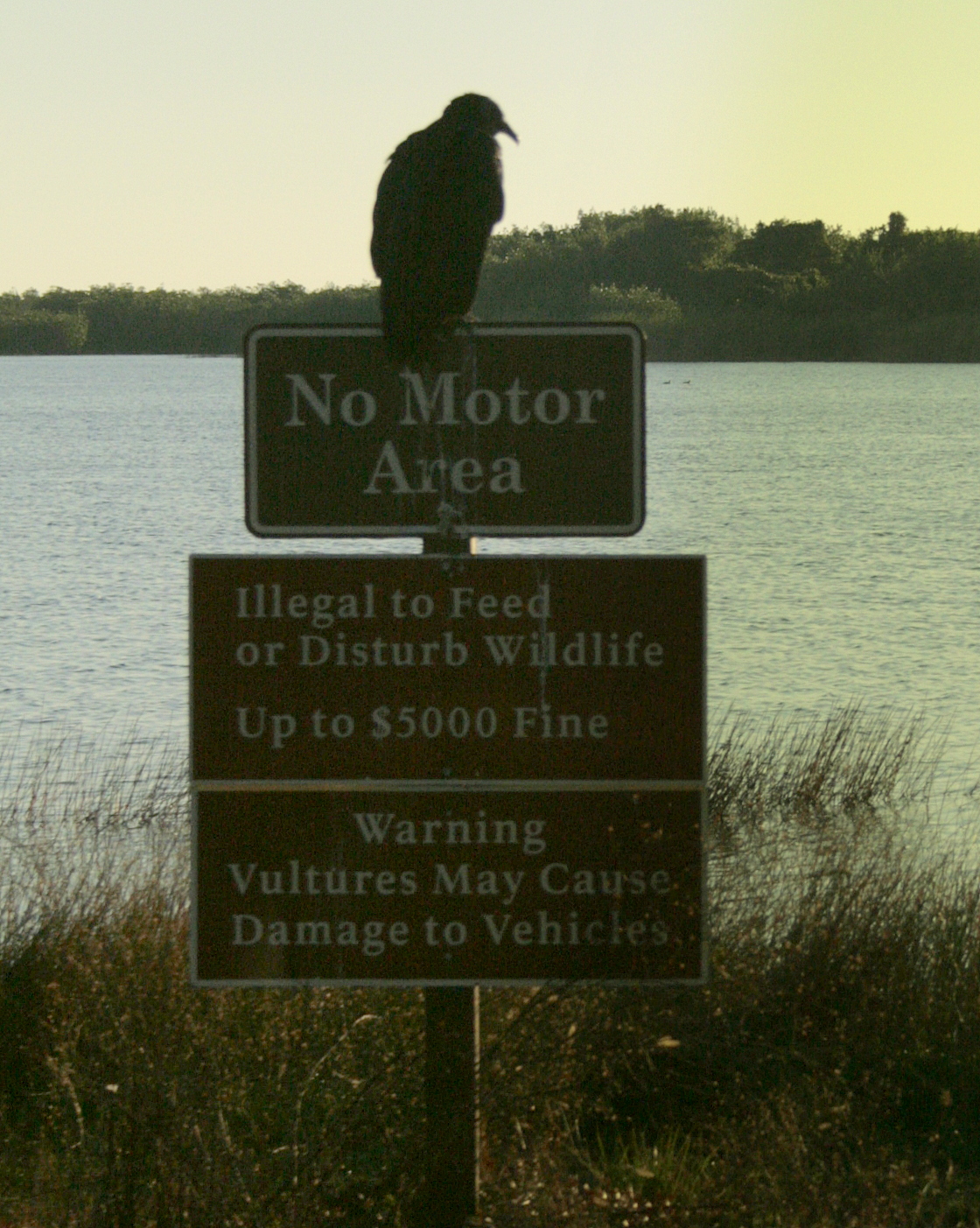
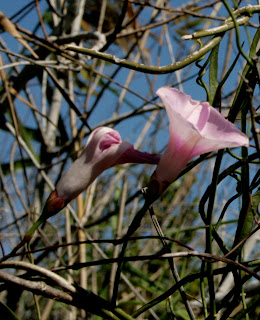
As we set up our "rig" at Flamingo Campgrounds under grey skies, clouds of mosquitoes swarmed us. Huge Black Vultures loomed about, hopping along across the campsites, sitting on signposts and spiralling above our heads. Their ominous presence added to the stark geography, flat grasslands and marshes, with random low mangrove trees; scenes similar to Africa's Savanna. Flamingo is at the southern tip of the park on Florida Bay.
Chris was eaten so badly by mosquitoes and No-see-ums that he was up most of the night scratching, and spreading Cortisone gel on the itchy parts and hunting down invader mossies who sneeked their way inside. A small concession for our night of unrest was listening to the Barred Owl hoot until sunrise.
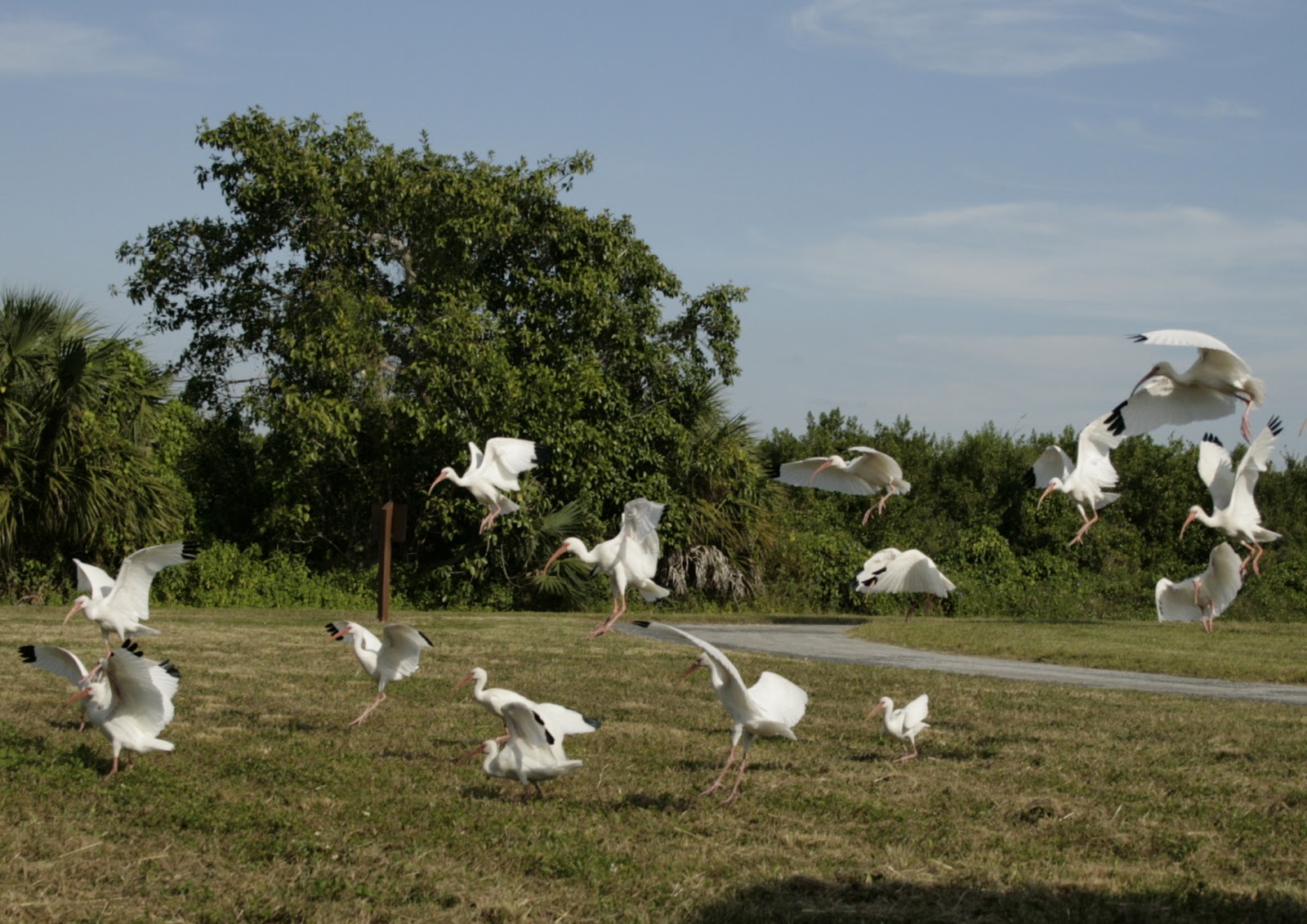
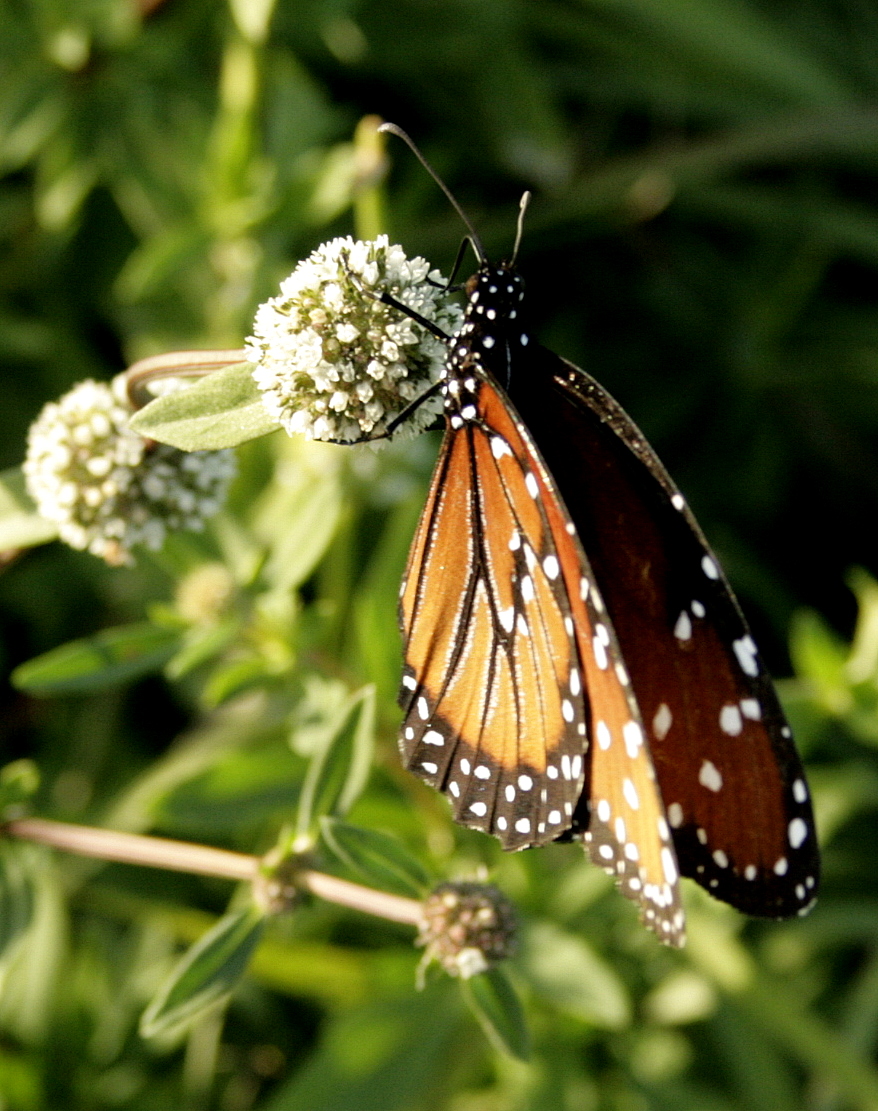
Wednesday, November 21 was a promising morning with sunshine and strong breezes that proved unappealing to the bugs. Dixie and I walked around the park observing the many song birds, ibis, vultures and Monarch Butterflies that hung drowsily from the wild flowers and stretched their wings slowly in preparation for their day. Most places in the park are out of bounds to pets so Dixie had to stay behind while we ventured into the park trails hoping that we would see at least one alligator.
The Ahinga Trail at the Royal Palms Centre was a combo-paved and boardwalk series of paths that ran beside grassy marshland, creeks and open ponds. We saw a number of the fish-eating Ahingas whose size and habits are similar to the Cormorant but with more attractive plumage and they catch fish by stabbing them with their beaks. They were in the familiar stance with their wings extended for drying. The bridges crossing the shallow creeks allow visitors a vantage point to watch the birds swim under water searching for fish. We were lucky to see one manoeuvre a spirited fish, in the dance of death, whack it's prey on a log and eventually gulp it down. Top grade sushi all the way!


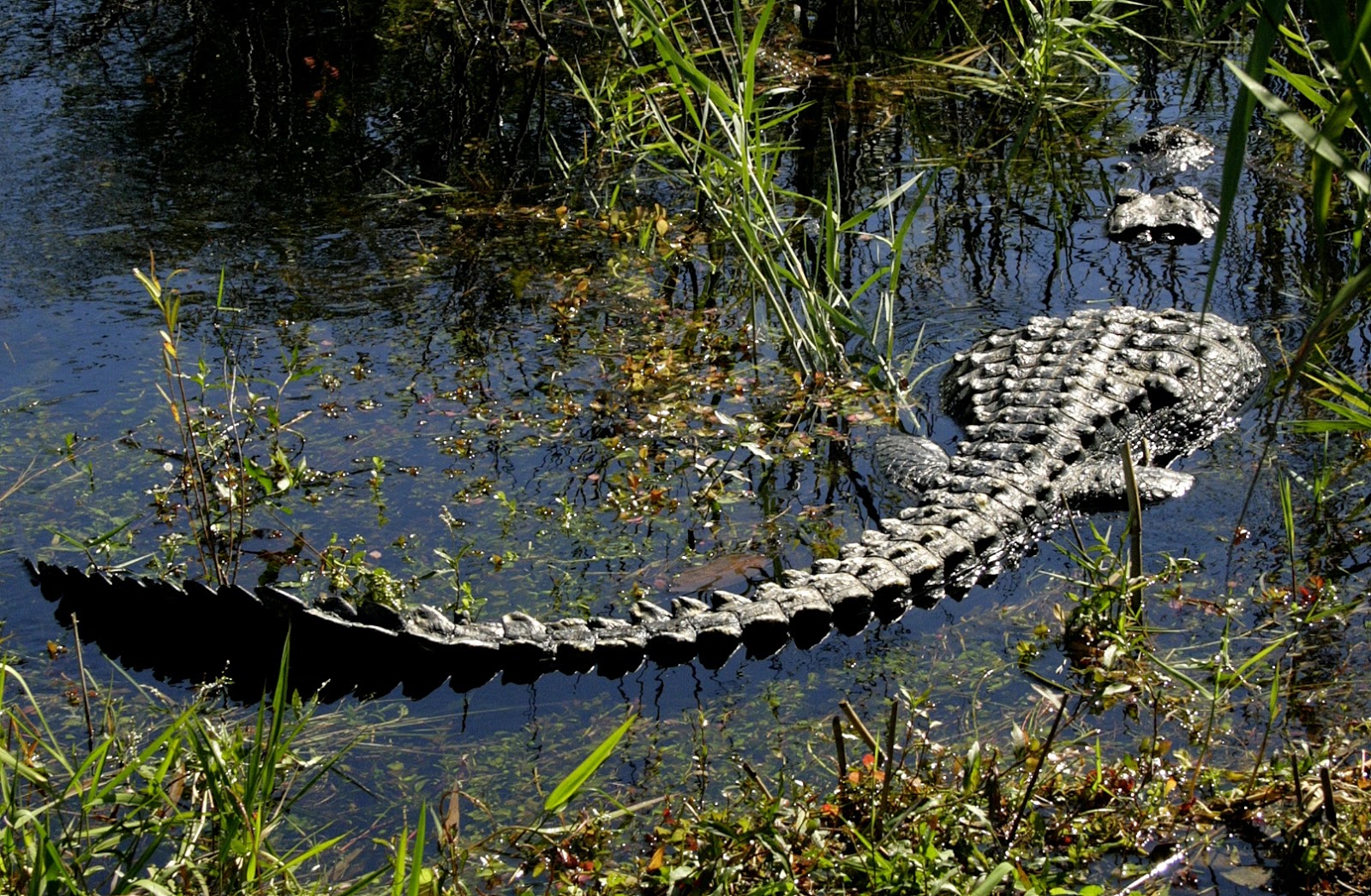
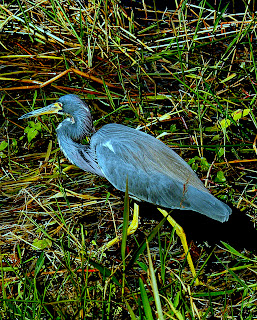
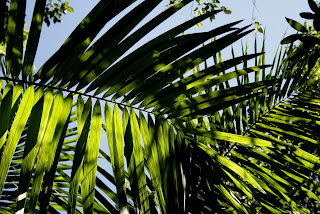
We were barely along the entrance path when we saw our first alligator, a twelve footer with a wide girth. He was facing away from us when we entered the park and had turned his jaw toward the visitors on our way back. There was no danger as he was at least 25' away. Next, we saw a ten footer about 12' from us basking in the sun and partially submerged in the swamp's lily pads and turtle grass. On another bridge the back and legs of a smaller 8' gator were visible as he swam between the reeds and grasses and passed beneath us into another pond. The Mangrove, Gumbo Limbo trees and Strangler Fig had gorgeous foliage, twisted branches and complex trunk formations. Small Green Heron, Blue Heron and Egrets were everywhere and we also watched a Loggerhead Turtle, about 25" across, swim just below the surface beside us. All very fascinating but no match for our alligator sitings.

Much of the Everglades is known as The River of Grass, and the area around the Ahinga trail is on one of the main waterways, or sloughs as they call it, through the glades, thus the plentiful wild gator population. An observation tower at the Pa-hay-okee Overlook allowed a panoramic view across what initially looks like a prairie-scape until closer observation reveals the water beneath the grassy tufts.
Thursday November 22 was the US Thanksgiving and the campgrounds were filled up with tenters and many RVers towing fishing boats. We actually moved our campsite to the edge of the park to be as far away from "the masses" as possible. So much for getting away from the holiday crowds.
We spent a lazy day about camp strolling the pathways and along the shore of Florida Bay. Did I mention that there is no Verizon signal for wifi or cell here so we are enjoying our books and isolation from technology?! (-cb ...Caron was.)

On Friday we decided to head back to the Ahinga Trail for more gator spotting. We had Dixie with us so we had to tire her out first so she would sleep in the car while we hunted reptiles. A really nice grassy and forested campground called Long Pine, which is closer to the park entrance, and was the perfect mosquito-free spot to take a long hike. Dixie even went into a lake but only up to her ankles as one can never discern whether a croc or alligator is lurking below the surface.
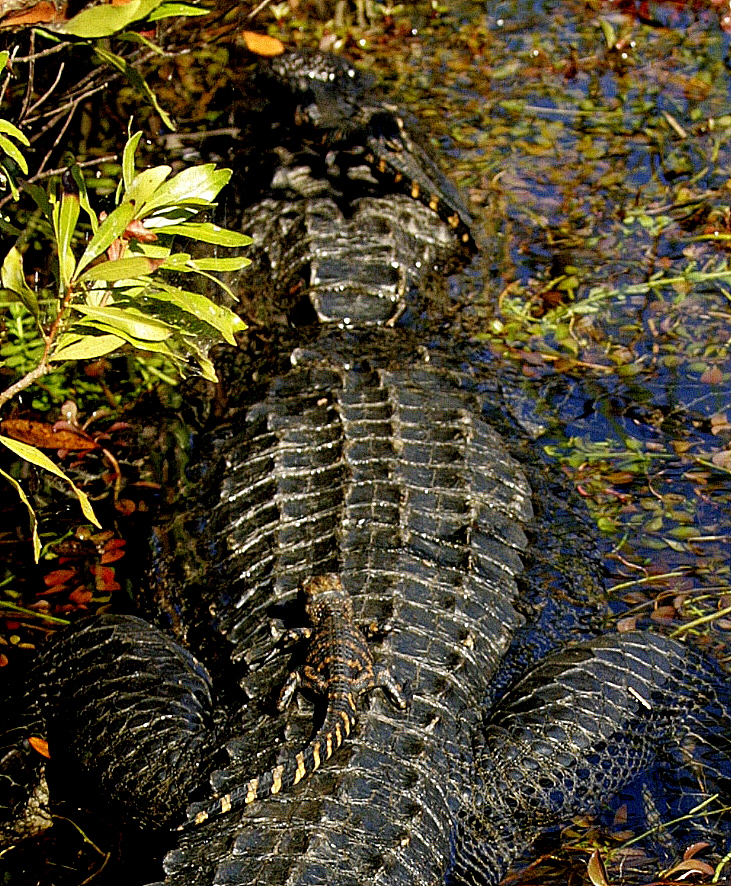
Before we entered the Royal Palm Centre, we saw a young man along the road with his camera aimed at the ditch. That could only mean one thing. We pulled the car, over grabbed our cameras, and ran back to his position. It turned out to be a twelve foot Momma Gator sun basking with one baby on her head and another on her back. The local chap told us that she had about 25 babies that can often be seen in the grasses around her but we didn't spot any.We stood there fascinated by what was before us and snapped away with our cameras. Mum and her babies didn't budge the whole time we were there.
Everyone who enters that park stops to photograph the Beware of Cougars sign. Although endangered, there are at least ten cougars roaming about the Everglades. The silhouette on the sign is as close as I'd like to see one!
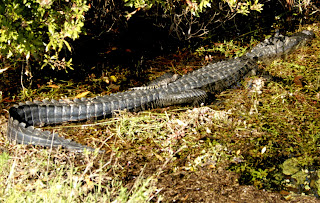
The Ahingas Trail was a winner again. The first poser was a small 8' alligator close to the bridge grinning at the tourists in a Kodak moment pose. We could really study his texture his eyes and see his ominous teeth. I know that I refer to these fellows as guys but hey, even the most liberated human female doesn't look this rough! Our second gator was a ten footer that we could have reached down and touched, he was sooooooooo close! Another black leathery friend lay upon the bank about ten feet away. Our biggest thrill was watching a twelve foot alligator swim from the far side of the lake towards us and pass directly below the bridge where we stood, about 4 feet up. And yet another sighting across the pond of two "allies"!
What a crazy gator day!!!!


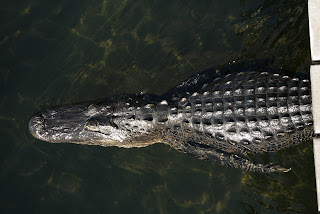
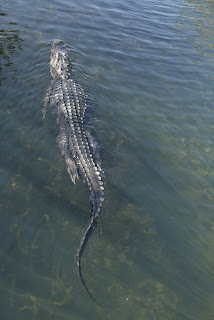
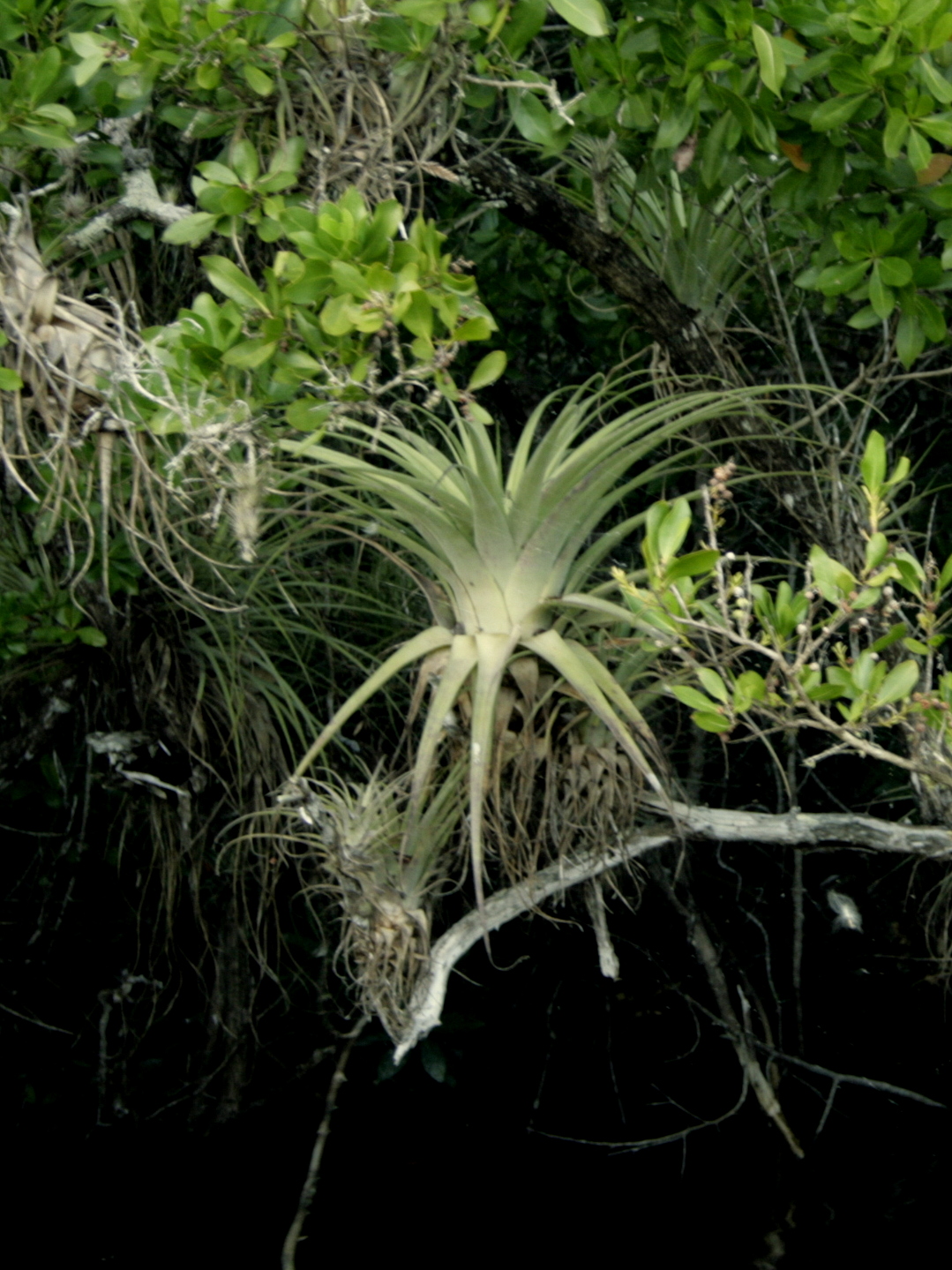
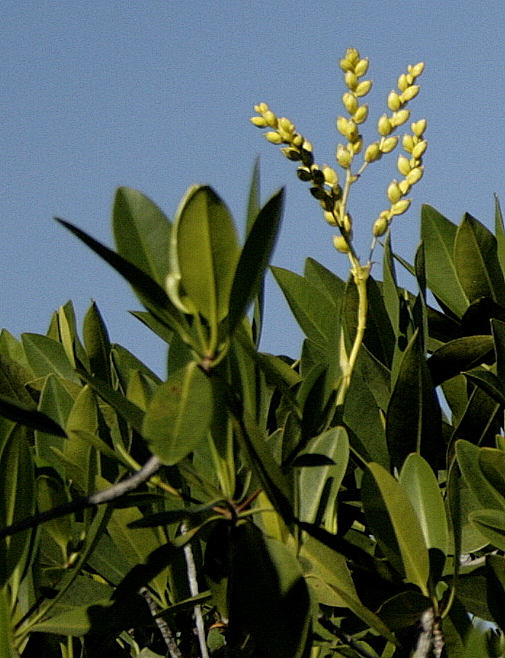
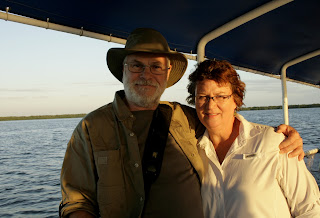
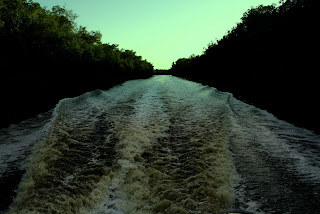
Back in the Flamingo Campground, we dropped off Dixie and boarded a tour boat for an evening cruise up a manmade canal to a inland lake; Jeff, our sharp-witted and knowledgeable guide and captain pointed out the varieties of Mangrove trees: Red, Black and White; and the various heliotropes or air plants that attach themselves to the mangroves adding diverse foliage and flowers. Jeff taught us how to recognize the down turned leaves of the Manchineel tree whose foliage cause skin to burn and blister and toxic sap can kill a human. The Buttonwood Canal that we travelled down was skirted by Red Mangroves where we spotted a very small crocodile about two feet long. The boat's engine produced a gorgeous chestnut-coloured wake. We entered Coots Bay where "rafts" half a mile long, of hundreds of Black Coots, floated in the brackish waters. We followed the elegant Tarpon Creek to the huge waters of Whitefish Bay. The water here is a mix of salt water from the Gulf of Mexico in the northwest and fresh water that draining down from Lake Okeechobee. The fish populations of Tarpon, Shark of many varieties, Gar, Large Mouth Bass and Mangrove Snapper is large, making this a prime destination for anglers. As everywhere in the Everglades, we saw a variety of birds: Great Blue Heron, Egrets and Osprey abound. The sun was setting when we docked and it cast an orange gloss across the rutted back of a large croc that was swimming towards the marina pier.
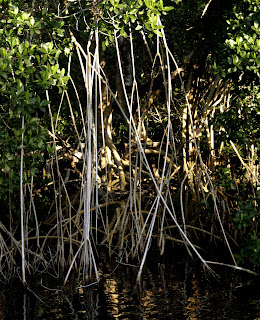

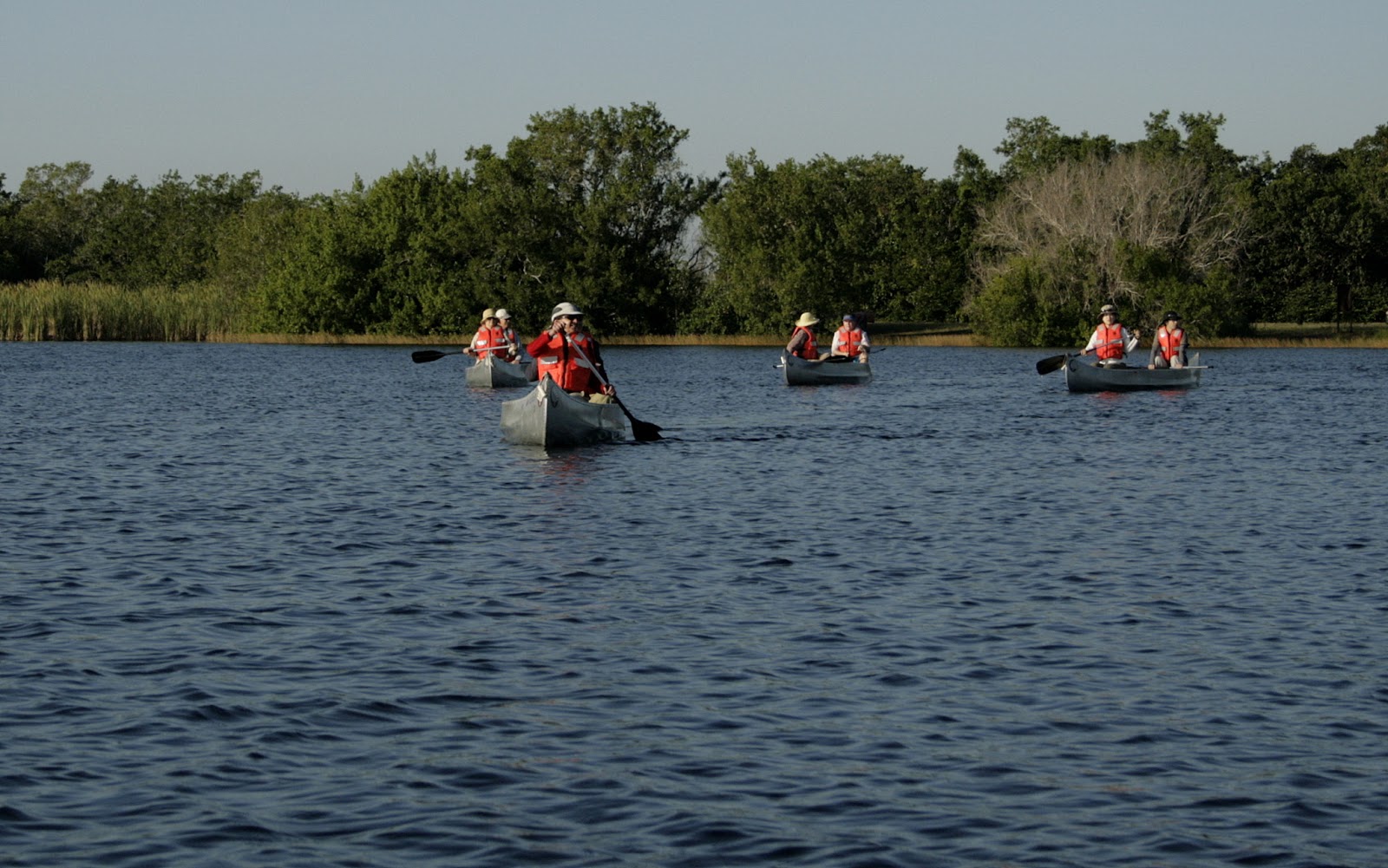
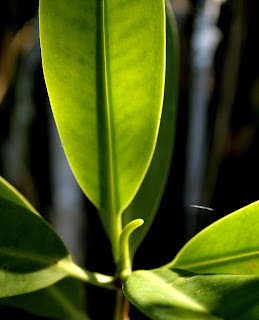
On Saturday morning we were up by 6am and greeting our guide Daniel by 7:00 for our canoe trip of Nine Mile Pond. The tour was free to campers who registered early and our park ranger host/guide was fantastic! We were educated about the limestone bedrock upon which the waters, grasses and trees of the Everglades sit. As well as add interesting textures to the Mangroves, the Bromeliad plants store water in their vase-like bases that host mosquito larvae and in turn, frogs, lizards and birds that feed on them. Canoeing through the maze of mangroves was a challenge to our paddling skills. Navigating with the six other canoes made communication important to avoid entanglement in the Mangrove roots and branches



We floated into a sea of algae that resembled a sewage overflow or a mass of rotting bananas floating on the water's surface. The "Periphyton Algae" was described by Daniel as mushy bread sticks which helped, if only minimally, to distract us from comparing our surroundings to a myriad of other disgusting substances. As gross as it looks, it provides a wealth of nutrients for the pond life and even stores water during drought periods. The many Bladder wort, fern-like plants, float freely under the water and produce small yellow blooms above the pond's surface. Another of nature's miraculous inventions, this plant's tiny, submerged bladders, open and close, feeding on minute aquatic life. Paddling across an area with only sparse mangroves and underwater foliage, we learned that air boats, once used as a major source of transport in the glades had damaged the environment. Protected plants and animals are slowly coming back into the area. Daniel guided us to the shores of a wide open pond where a giant crocodile sunned himself on the bank. It is so huge and has lived within a small range for such a long time, that naturalists believe that as well as consuming tons of fish and turtles, that this bad boy also dines on smaller gators!
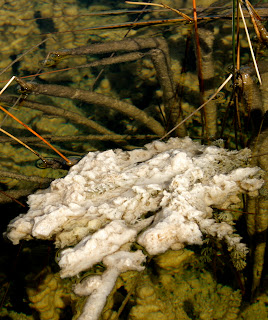
periphyton algae
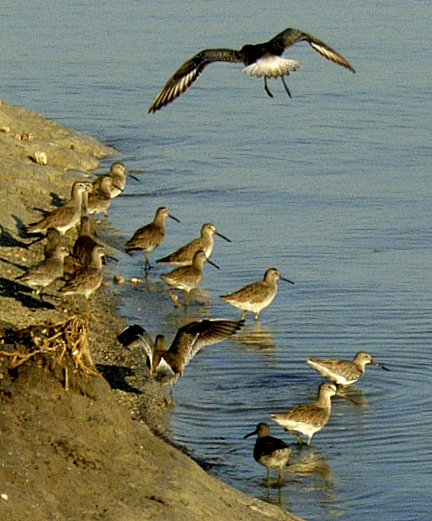
Our exploration of the park later Saturday took us along the shore of Florida Bay where Dixie sent flocks of Sandpipers and Killdeer into flight. Many brave campers tented in the fields there that were thick with mosquitoes. They would have to be drenched in Deet to survive. We spent "cocktail hour" down by the marina docks watching the fishing boats come in and canoes and kayaks head out into Florida Bay which was now as flat as freshly steam-rolled pavement. Our quiet meditations during the sunset were abruptly ended with the arrival of insects who proceeded to dine on our wrists, ankles and behind our ears. Not romantic!
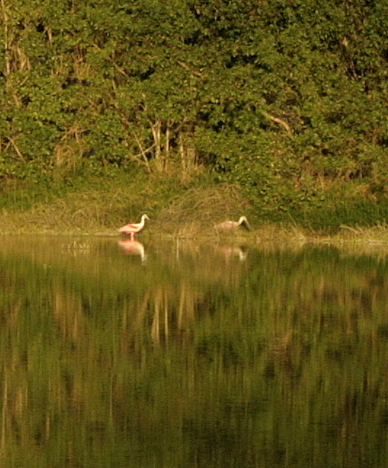
Sunday afforded us a few more hikes, the best of which lead us to three Spoonbills in Eco Pond. I had seen a couple of these pink beauties fly over and was so excited to actually see some feeding close by. As the sun began its descent, its magical light hit the birds and presented a glorious display of salmon, rose and blush pink. The birds used their bills sloshing them back and forth in the water collecting tasty morsels. What a crazy design, a bird with a built in eating utensil!
Remarkably, the hawks here have adapted to the campground where they are adept at barbecuing their mice for dinner!